Whole House Filtration

THE SMART SERIES
WHOLE HOUSE FILTER

A multi-stage, multimedia whole house filtration system engineered to protect your entire home's water supply — no electricity required.

⚡ No Electricity Needed 🚿 Whole-Home Coverage ♻️ BPA-Free Media 🛡️ ISO-Certified Components

Most homes have no idea what's actually moving through their pipes — until it shows up in the laundry, the shower, or the kettle.

One System. Every Tap.

The SMART Series is a point-of-entry whole house filter, which means it treats water the moment it enters your home — before it ever reaches a faucet, shower, washing machine, or water heater. Instead of filtering one fixture at a time, it protects every fixture at once.

At the core of the system is SMART Multimedia: a custom blend of activated carbon, redox alloy, and ion-exchange resin engineered to tackle a wide spectrum of common water contaminants in a single pass — without needing electricity, chemicals, or a daily routine to keep it running.
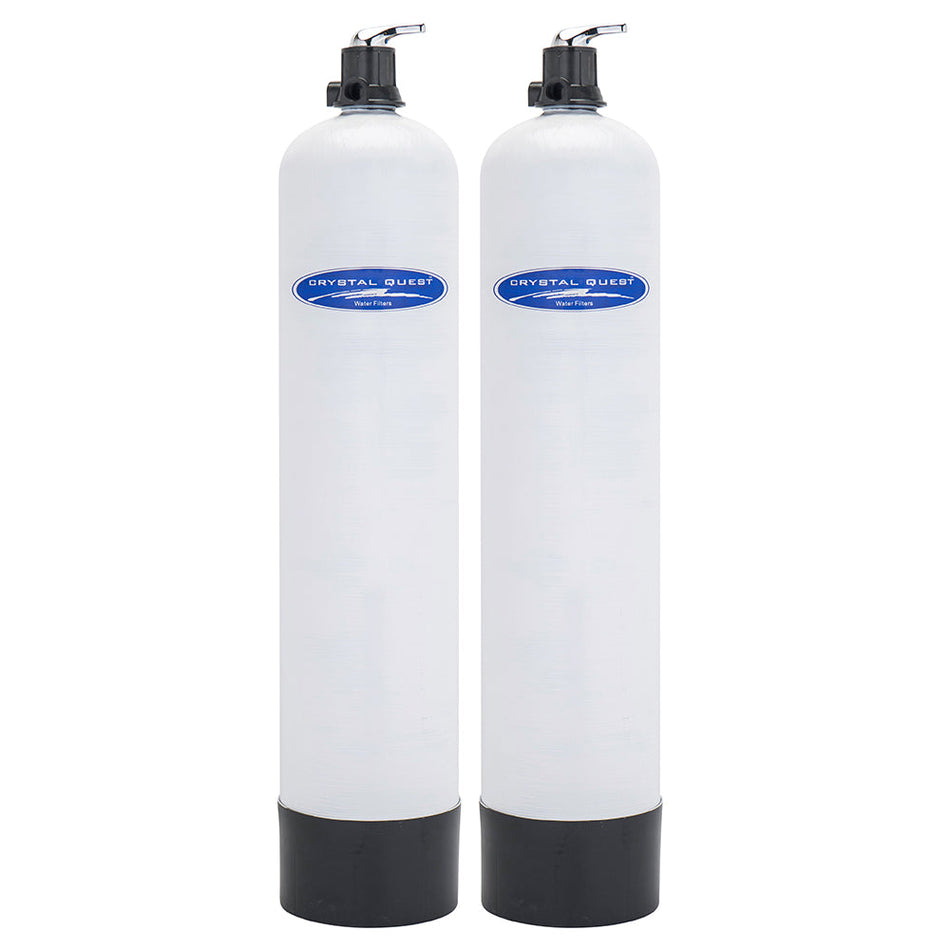
SMART Series Whole House Water Filter

What's Inside SMART Multimedia

The SMART cartridge isn't a single material — it's a layered blend, each component doing a different job as water passes through.

🌰
Standard Coconut-Shell GAC
Granulated activated carbon made from coconut shells absorbs chlorine, taste, odor, and a broad range of organic compounds.
⚙️
Catalytic GAC
A second, more reactive carbon stage specifically targets chloramines — a disinfectant byproduct that standard carbon alone struggles to fully break down.
🔗
Redox Alloy Media
A copper-zinc alloy blend that uses a redox (oxidation-reduction) reaction to neutralize heavy metals like lead and mercury, and inhibits bacterial growth within the media bed.
🧬
Ion-Exchange Resin
Swaps out unwanted dissolved ions for more benign ones, adding another layer of reduction for select dissolved contaminants.
Ceramic Balls
Help oxygenate the water as it passes through the media bed, supporting better taste and clarity.
💎
Tourmaline Balls
Naturally occurring mineral spheres that gently raise alkalinity, nudging output water toward a more balanced pH (ideal range: 6.5–8.5).

What It's Designed to Reduce

The layered media bed targets a wide range of contaminants in a single filtration pass — common across both municipal and well water sources.

Chlorine Chloramines VOCs Trihalomethanes (THMs) Pesticides & Herbicides PFAS / PFOS Heavy Metals (Lead, Mercury) Hydrogen Sulfide Iron Oxides Sediment, Silt & Sand Petroleum & Pharmaceutical Byproducts

The Four Trihalomethanes (THMs)

Disinfection byproducts formed when chlorine reacts with organic matter are specifically targeted by the catalytic carbon stage, including:

Trichloromethane (Chloroform) Dibromochloromethane Bromodichloromethane Tribromomethane (Bromoform)

Benefits Around the Whole House

Because the SMART Series treats water before it splits off to every fixture, the impact shows up in places you might not expect.

Can improve water heater efficiency, since scale and sediment buildup is reduced
Less detergent and soap needed for the same clean — savings add up over time
Soap and shampoo lather more easily, often translating to softer skin and hair
Reduced wear on washing machines, dishwashers, and water-using appliances
Fabrics stay brighter and last longer wash after wash
Dishes come out cleaner with fewer spots and less soap film
Less soap scum buildup on bath and kitchen fixtures
Noticeably better taste and smell at every tap
Suitable for cooking, baby formula prep, and pet water bowls

How Water Moves Through the System

Four sequential stages — each one handling a different category of contaminant before water ever reaches your plumbing.

1
Pre-Filtration
Sediment Cartridge
Incoming water first passes through a pleated sediment cartridge that physically strains out sand, silt, rust particles, and dirt — protecting every downstream stage from premature clogging.
2
Post-Filtration
Solid Carbon Block
Next, a dense carbon block cartridge reduces volatile organic compounds (VOCs) along with any residual insecticides, pesticides, and industrial solvents that made it past pre-filtration.
3
Core Stage
SMART Multimedia Bed
Water then flows through the layered SMART Multimedia bed — standard and catalytic GAC, redox alloy, ion-exchange resin, and ceramic/tourmaline balls — handling chlorine, chloramine, heavy metals, and the broader contaminant list above in a single pass.
4
Optional
Water Softening
For homes dealing with hard water, an optional softening stage can be added directly to the system. Two approaches are available depending on your preference — see below.

Choosing a Softening Approach

Traditional Softener

Uses ion exchange to swap hard minerals (calcium, magnesium) for sodium or potassium ions. Requires periodic refilling of a brine tank with salt.

Salt-Free Conditioner

Doesn't remove calcium and magnesium — instead converts them into harmless nanoparticles that resist forming limescale. Works at a nano-molecular level with zero added sodium.

Salt-Free Softener (Crystallization)

A newer approach that converts calcium into stable, heat-resistant calcite crystals which rinse away naturally — reducing existing scale without adding salt.

Optional System Add-Ons

The SMART Series can be configured with additional protection layers depending on your water source and household needs.

UV Sterilizer

Disinfects against bacteria, viruses, algae, and protozoa using UV light — faster than chlorine and without adding chemicals to your water.

Leak Detector Valve

Monitors for leaks within the system and automatically shuts off the water supply to prevent flooding before it starts.

Vacuum Breaker

Installed inline ahead of the filter system to guard against rare negative-pressure events that could otherwise damage tanks and housings.

Metered Valve

Replaces the standard timer-based backwash schedule with one triggered by actual water usage — useful for households with variable demand.

Oxidation System

Uses ozone to oxidize water for additional treatment, often paired with iron or sulfur-heavy well water.

Specifications

Home Water Usage1–3 Bathrooms2–4 Bathrooms
Filter Media Volume1.5+ cubic feet2.0+ cubic feet
Capacity (gallons)1,000,0001,500,000
Service Flow Rate9–11 GPM10–13 GPM
Tank Dimensions10" x 54"12" x 52"
Tank MaterialStainless Steel or FiberglassStainless Steel or Fiberglass
Backwash TypeAutomaticAutomatic
Brine Tank Dimensions*18" x 33"18" x 33"
Grain Capacity*48,00060,000

*Applies only when a softener add-on is selected.

A Simple Way to Think About Capacity

Capacity is just the total volume of clean water the system can produce before media needs replacing — and an easy proxy is your bathroom count.

1,000,000 gal
≈ 1–3 bathroom homes
1,500,000 gal
≈ 2–4 bathroom homes

Replacement Media & Cartridges

Routine replacement keeps the system performing at its rated capacity. Here's what eventually needs swapping out:

Replacement Media

ComponentReference
SMART Multimedia BlendSMART-RM-MEDIA
Eaglesorb Water Softener ResinSMART-RM-SOFT
Eaglesorb Anti-Scale MediaSMART-RM-SCALE

Replacement Cartridges

ComponentReference
Sediment Cartridge (2-7/8" x 20")SMART-RC-SED20
Carbon Block Cartridge (2-7/8" x 20")SMART-RC-CARB20

Need help identifying which part fits your specific configuration? Contact our team — we'll match the right replacement to your unit.

Questions

SMART SERIES FILTER
REPLACEMENT FAQS

How do you determine capacity? +
Capacity is the total amount of clean water the system can produce before media needs replacing. A simple shortcut: 1,000,000 gallons covers roughly 1–3 bathroom homes, while 1,500,000 gallons covers 2–4 bathroom homes.
What contaminants does it remove? +
The SMART Series targets sediment, chlorine, chloramines, VOCs, heavy metals like lead and mercury, pesticides, herbicides, and a number of other common contaminants found in both municipal and well water.
Does it require electricity to run? +
No. The system operates entirely on your home's existing water pressure — no electrical hookup needed for the core filtration stages.
How often do filters need to be replaced? +
It depends on your water quality and household usage, but most cartridges are replaced every 12–18 months. Keeping an eye on flow and pressure over time will help you spot when a replacement is due.
Do I need a plumber for installation? +
Most comfortable DIY installers can handle it. That said, if you're not confident with plumbing work, hiring a professional helps ensure a clean, leak-free installation.
Will it affect my water pressure? +
The system is designed to maintain strong water pressure throughout filtration. If your incoming pressure is already on the low side, you may notice a slight reduction — but most homes see no meaningful difference.
Can it be used with well water? +
Yes. We recommend a water test first so we can confirm which specific contaminants are present in your well water and configure the right cartridge combination to target them.
What's the difference between the softener options? +
A traditional softener uses salt and ion exchange to physically remove hardness minerals. Salt-free conditioners and softeners instead neutralize or crystallize those minerals so they don't form scale — without adding sodium to your water.
Not Sure Which Configuration Fits Your Home?

Take our short water system survey, or reach out directly — we'll help you size the right SMART Series setup.

💧 Take the Survey → Contact Us →